




















After nursing school, every future nurse must take and pass the National Council Licensure Examination (NCLEX). The NCLEX is administered by the National Council of State Boards of Nursing (NCSBN), which updates the exam approximately every three years to keep pace with industry standards.
In April of 2023, the NCSBN updated the NCLEX, and it’s now referred to as the NextGen NCLEX (NGN). Students sitting for this exam in the fall of 2023 will take the new version.
The goal of the changes is to make the new exam more closely mimic scenarios nurses will face in their daily work.
Critical judgment is a focus
Critical judgment was an area the NCSBN identified as a key area for improvement among nursing students. The NCSBN defines clinical judgment as “the observed outcome of critical thinking and decision-making”.
The reasoning for this is defined on the NCLEX website:
“The NGN launched on April 1, 2023, to better measure nursing candidates’ clinical judgment and decision-making abilities through the use of innovative item types. The need to measure this stemmed from information gathered during the 2013-2014 NCSBN Strategic Practice Analysis, which showed newly licensed nurses are increasingly expected to make complex decisions while caring for patients.”
You can read more about the Clinical Judgement Measurement Model here.
New question types
There are several new item types on the NGN for 2023.
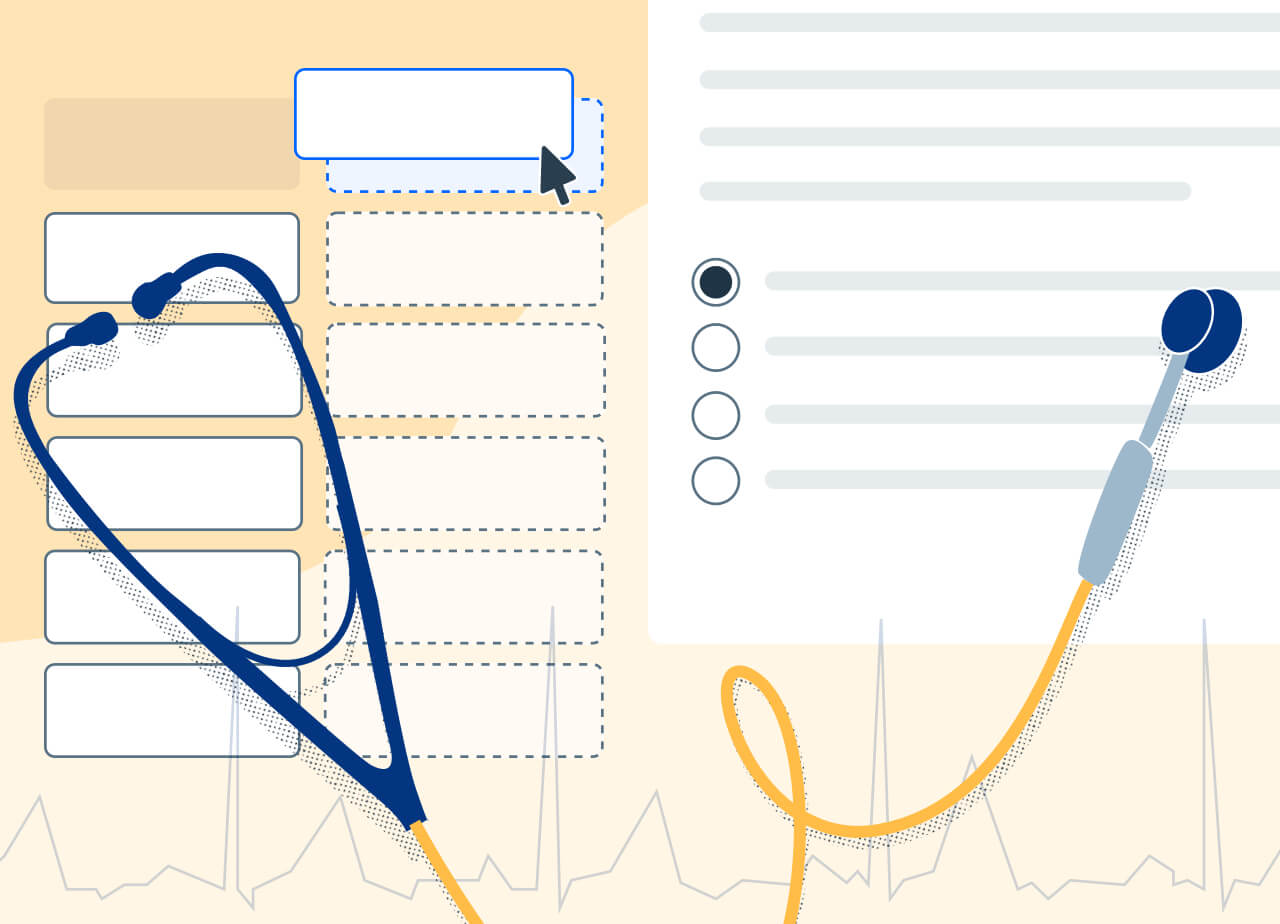
- Extended drag & drop: Pair items from two columns.
- Extended multiple response: Similar to ‘select all that apply’ where partial credit is awarded for partially correct answers.
- Drop down (Close): Complete the answer by selecting a word from a drop down list (similar to multiple choice). In some cases there will be multiple drop down menus.
- Text highlight (enhanced hot spot): The questions will ask you to highlight an area of text from a passage to show the answer.
- Matrix: Similar to a multiple choice but more complex. The question will ask you to choose several answers across a grid. For example, a list of tests might be provided and the answer would be to distinguish which are essential, non essential, and harmful.
- Case Scenario: Two to eight questions might reference a single case (previously questions had been standalone). The questions use a split screen format where a case will be on one side and questions will be on the other.
You can find test plans with content outlines for the updated NCLEX here.
New scoring method
The previous version of NCLEX items was scored as either all correct or all incorrect. The new method accounts for questions with multiple answers, awarding partial credit.
Not new: Computer Adaptive Testing (CAT)
The exam will still adjust the difficulty of questions based on how well the test taker performs. The goal of CAT is to use the fewest possible questions to assess knowledge. The NCLEX can have between 85-150 questions. Someone can pass or fail after taking only 85 questions. It depends on how well they did when the question difficulty increased.
Bottom line, don’t get discouraged or too excited based on the number of questions you were given.
Is the new NCLEX harder?
Yes. There is a general consensus that the newer version is more challenging because of its focus on critical judgment. While this may not sound great for current students, it’s theoretically a good thing in the long run. The exam should be even better at preparing prospective nurses for what they’ll face in the field.
Take this new information into consideration while you’re preparing for either the NCLEX PN or NCLEX RN.
