





















Depending on the certification, personal trainers must recertify every 2 or 3 years. A recertification doesn’t mean re-reading the same textbook and taking the same test. Rather, the industry expects trainers to branch out and expand their libraries of exercises and methodologies over time.
This ensures the trainer is up to date on the latest exercise science studies, strengthening their foundation while integrating new knowledge. Getting a certification in a new specialty – which would then count towards your recertification requirement – is also a valuable marketing tool, allowing the trainer to target a specific market and charge more for their specialized services.
If your recertification deadline is quickly approaching and you want to learn something new that makes you stand out, the ACSM exercise physiologist certification could be exactly what you’re looking for.
Let’s take a closer look at the benefits of becoming an exercise physiologist and how this differs from the standard personal training certification. We’ll also discuss the details of the ACSM exercise physiologist recertification and how it can help your fitness career.
What do exercise physiologists do?
Exercise physiologists are responsible for standard preparticipation health screenings, cardiovascular and muscular testing, exercise program creation, and behavioral coaching.
Sounds like a pretty typical day in your current role as a personal trainer, right? Well, here’s the thing: exercise physiologists have a very specific goal. Their primary focus is helping largely healthy people with medically controlled diseases.
This means the disease is under control, and the lifestyle changes the exercise physiologist promotes have been proven effective in preventing further complications, so long as the client continues to implement them.
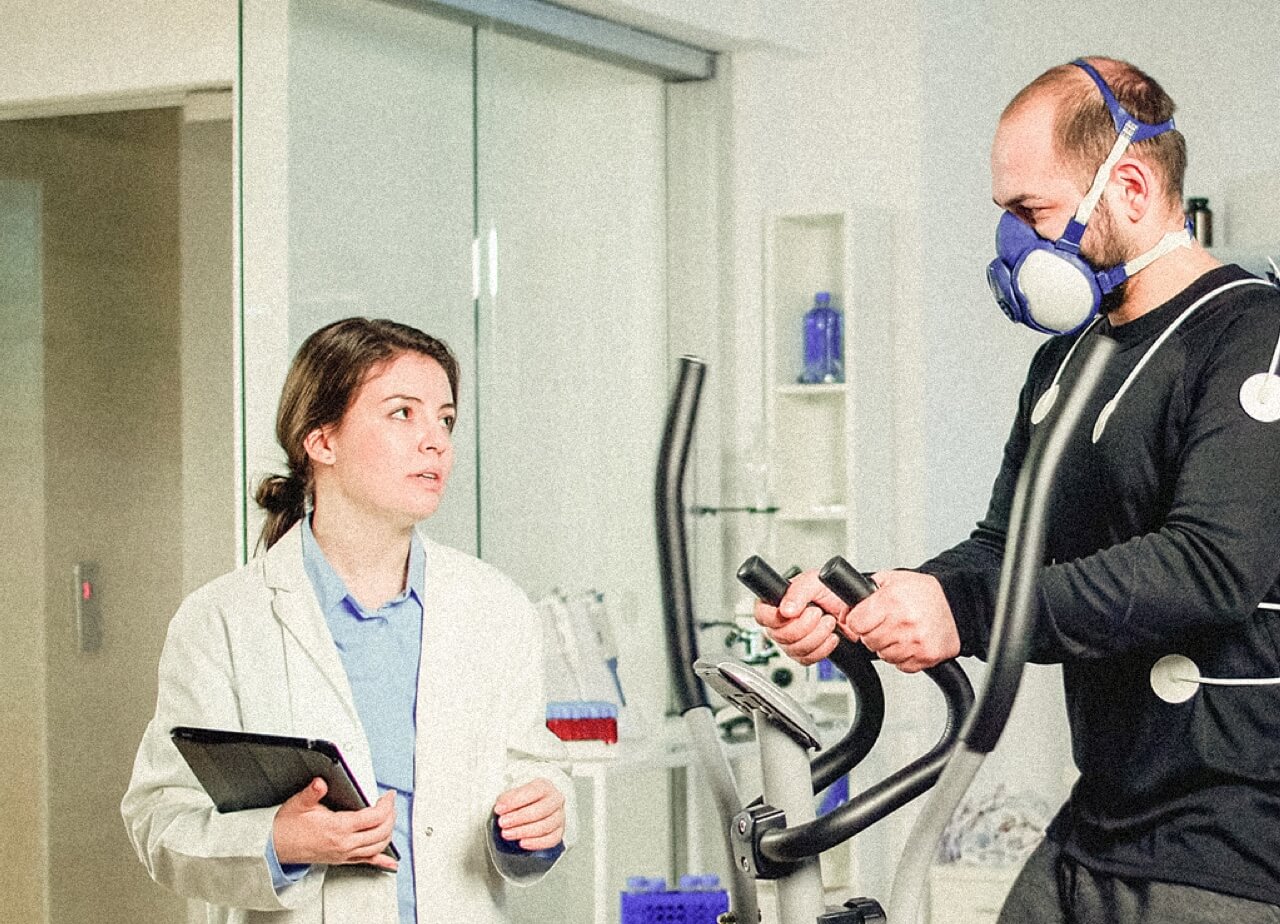
One of the most common examples of a medically controlled disease that an exercise physiologist deals with is cardiovascular disease. Given that it is a largely preventable lifestyle disease, the exercise physiologist will need to select appropriate assessments and exercises that align with the client’s current health status and the doctor’s recommendations.
For the cardiovascular disease scenario example, the trainer might begin with the Rockport Walk Test, an assessment of cardiovascular fitness that is low-intensity. When recommending exercises, the trainer might stay within the 50% to 65% heart rate reserve until the client has progressed to the point where a higher intensity would be appropriate.
It’s this focus on keeping the disease at bay that requires the exercise physiologist to be far more hands-on with medical history, check-ups, and long-term strategies.
Exercise Physiologists vs. Personal Trainers
A day in the life of an exercise physiologist and a personal trainer isn’t that different.
Both specialties utilize testing to determine an appropriate program for a client to maximize fitness and overall quality of life. Both create programs based on this testing. Both implement training in these programs and administer behavioral coaching to ensure adherence.
Here’s where things differ most: Exercise physiologists will incorporate disease control into exercise programming.
As mentioned above, exercise physiologists usually work with clients who have a medically controlled disease, and the primary goal is to ensure the client remains healthy without the reemergence of disease symptoms.
What’s more, given the fact that a Bachelor of Science (B.S.) in exercise science degree is required, it should come as no surprise that exercise physiologists either work in or plan to work in a medical field.
By comparison, a general personal training certification does not require postsecondary schooling or training.
What is the ACSM-EP certification?
The ACSM Exercise Physiologist certification is one of the most comprehensive certifications available to fitness professionals, allowing personal trainers and coaches to expand their knowledge and strengthen their authority and reputation.
The EP certification exam tests knowledge of physical fitness, evaluation practices, and program planning. Those areas are also deeply affected by whatever conditions or illnesses a patient has, so EPs must understand the various conditions and illnesses their patients face. Common condition categories include cardiovascular, metabolic, orthopedic, neuromuscular, and respiratory.
If you’re due for recertification and are interested in helping people live a life without worrying about past illnesses, we recommend the ACSM exercise physiologist certification.
What’s on the ACSM EP exam?
The exam consists of 140 questions. 125 are scored, and 15 are unscored. Those sitting for the exam will have a total of 210 minutes (3.5 hours) to complete the questions.
The types of questions fall into three styles: recall, application, and synthesis. These represent different levels of complexity that mimic what exercise physiologists will need to do on the job.
There are 4 ACSM-EP Performance Domains:
- Health & Fitness Assessment (33%)
- Exercise Prescription & Implementation (40%)
- Exercise Counseling and Behavior Modification (20%)
- Risk Management and Professional Responsibilities (7%)
Download the ACSM-EP® Exam Content Outline (effective July 10, 2025).
Becoming an exercise physiologist can be a great next step in your fitness career, or a good place to start if you’re planning to get a B.S. degree. Start preparing for the exam with Pocket Prep’s 600 ACSM-EP practice questions and a full-length mock exam.
