




















You put in the hours. You read the material, watched the videos, worked through the practice questions, and passed the exam. But a few months later, on the job, in the field, in the moment it actually matters, the knowledge feels thin. You know you learned it. You’re not sure you still have it.
This experience is remarkably consistent across industries and credentials. It happens to nurses and network engineers, to personal trainers and licensed counselors, to paramedics and project managers.
This isn’t a character flaw. It’s neurobiology; specifically, a mismatch between how most people prepare for certification exams and how the brain actually builds durable, accessible memory.
The good news: the same science that explains why knowledge fades also points to exactly what prevents it. The solution doesn’t require more time. It requires a different approach to the time you already spend.
The Forgetting Curve: Why Your Brain Is Designed to Let Go
In the 1880s, German psychologist Hermann Ebbinghaus documented something that most educators still haven’t fully built into their teaching. Without reinforcement, we forget most new information within days. The curve is steep. After a single study session, retention drops sharply within the first 24 to 48 hours and then continues to decline. By the time most people apply for their credential exam, much of what they learned in early preparation is already gone.
This isn’t failure. It’s the brain doing exactly what it’s designed to do—prioritizing information that gets used repeatedly and releasing what doesn’t.
Learning is a physical process. Every time you genuinely learn something, not just encounter it, but actively process and connect it, your brain changes structure. Neurons that fire together strengthen the synaptic connections between them. The neuroscientist Donald Hebb described this principle in 1949: “neurons that fire together, wire together.” The inverse holds just as reliably: neurons that stop firing together eventually disconnect.
The mechanism behind lasting memory is called long-term potentiation (LTP). This is a process in which repeated activation of a neural pathway causes structural changes at the synapse: more receptors, stronger connections, and physical growth of the neural architecture itself. This takes time and active engagement. A single exposure, no matter how well-designed, does not produce it.
What most study sessions produce instead is short-term chemical change: a temporary signal that feels, in the moment, like understanding, and fades quickly without reinforcement.
The Problem with Passive Learning
Passive learning is any activity where you receive information without being required to actively process, retrieve, or apply it. In certification prep, it shows up in familiar forms: re-reading highlighted notes, watching lecture videos, reviewing slide decks, scrolling through summaries. These formats are intuitive. They feel productive. And they produce far less durable learning than the time invested would suggest.
The issue isn’t that the content is wrong or the material is low quality. It’s that passive consumption produces a feeling of familiarity that the brain can easily mistake for knowledge. You read the definition, it looks familiar, it makes sense, and you move on with the impression that you’ve learned it. But familiarity and recall are not the same thing. One is passive recognition. The other is active retrieval. Only one of them works when you’re sitting for an exam or applying the knowledge on the job.
Neuroscientist Lara Boyd, whose research at the University of British Columbia focuses on how the brain changes during learning, puts it plainly: what you experience as improvement during a study session is often not the same as actual learning. Real learning—the kind that holds up under pressure, that’s accessible without prompting, that transfers to novel situations—requires structural change in brain tissue. And structural change requires active engagement, not passive exposure.
This is also why cramming works just well enough to be dangerous. Massed studying close to a deadline produces the short-term chemical changes that support temporary memory. You pass the exam. The information is briefly accessible. But without the structural reinforcement that spaced, active retrieval provides, that access deteriorates quickly after the test. The credential reflects what you once knew well enough to recall under those conditions. It doesn’t guarantee you’ll have it six months later.
What Actually Builds Durable Memory
The learning science on this is consistent across decades of research. Three practices, in particular, produce the structural brain changes that make knowledge reliable.
Retrieval practice
Testing yourself by answering questions and recalling information from memory, rather than re-reading, produces significantly better long-term retention than passive review. This is sometimes called the testing effect, and it works not because testing measures learning but because the act of retrieval is itself a powerful learning event. Every time you successfully retrieve a piece of information, the neural pathway for that information strengthens. Every time you attempt retrieval, get it wrong, and then receive feedback that corrects you, the brain does something even more valuable: it activates the inhibitory pathways that help distinguish correct from incorrect responses. The right answer doesn’t just get added. The wrong answer gets actively suppressed.
Spaced repetition
Distributing practice over time by returning to material days or weeks after initial exposure exploits the brain’s sensitivity to the timing of activation. Reviewing a concept when it has partially faded forces a stronger reconstruction effort, which deepens the neural pathway more than reviewing the same material repeatedly in a single sitting.
The spacing effect is among the most robust and well-documented findings in the science of learning, with more than a century of research confirming it across ages, subjects, and study designs.
Meaningful connection
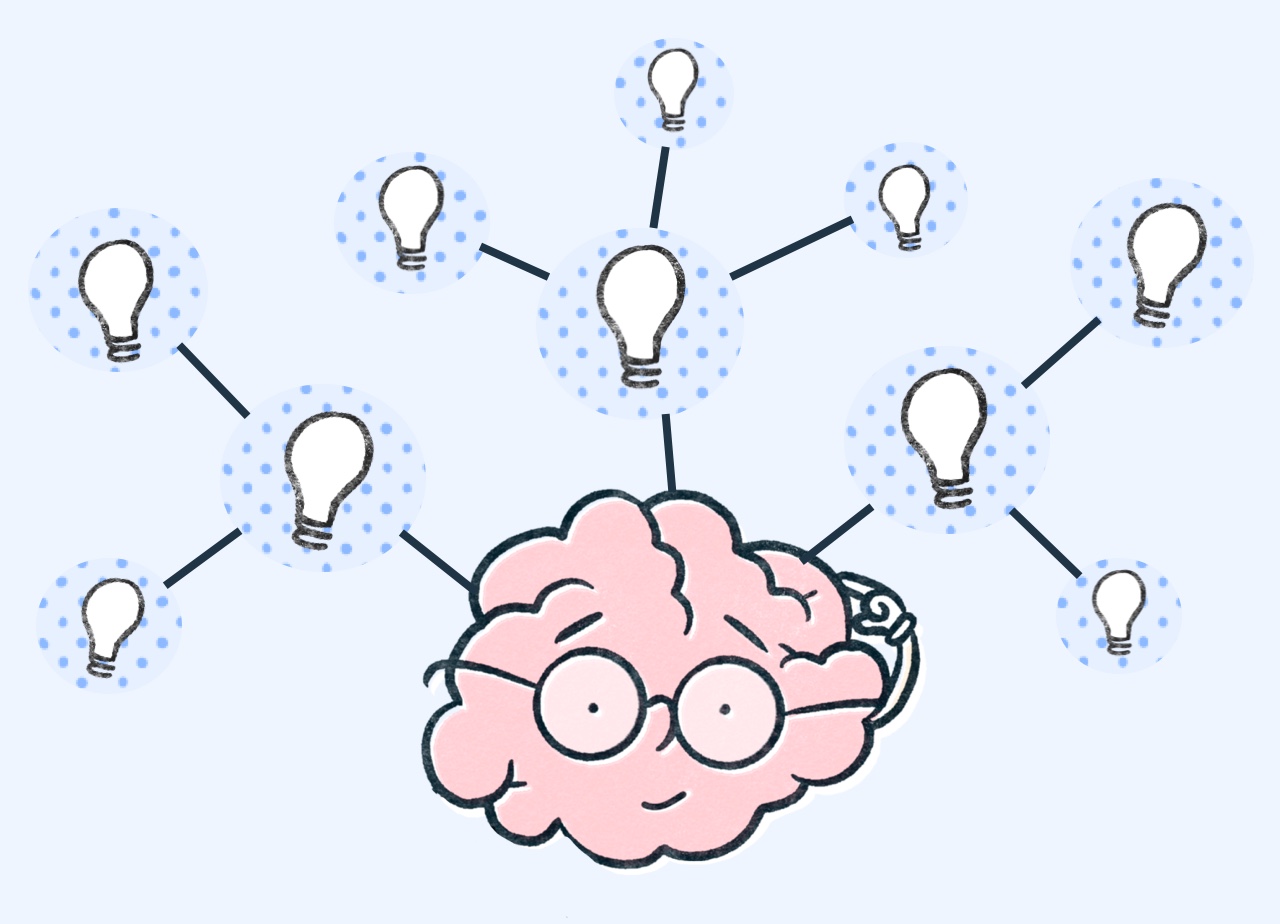
The brain doesn’t store information like a filing cabinet. It stores it in relation to other things it already knows. When new content is connected to prior knowledge (when a concept is understood in context rather than memorized in isolation), it becomes part of a network of associations that make it easier to retrieve and harder to lose. Understanding is what triggers the neural wiring process. Content without meaning is content the brain is primed to discard.
Difficulty Is the Point
One of the most counterintuitive findings from learning science is that struggle improves retention. The desirable difficulty principle holds that introducing the right kind of challenge during practice—retrieving information that’s partially faded, working through a scenario without cues, varying the type and order of questions—produces more durable learning than smooth, easy, error-free review.
This goes against the instinct most learners have. A study session that feels hard, where you can’t immediately recall answers, where you’re uncertain, where you get things wrong, feels less productive than one where everything flows easily. But the research consistently shows the opposite is true. Effortful retrieval leaves a deeper trace. The struggle builds neural pathways.
Errors, when followed by accurate feedback, are especially valuable. When you answer incorrectly and then learn why, the brain doesn’t just add the correct information; it actively inhibits the incorrect pathway. Getting something wrong and correcting it is not a setback in the learning process. It is the learning process.
Study Hours Are Not the Unit That Matters
Most certification study plans are organized around time: study for X hours per week, finish the material by a certain date, and take the exam. Hours are a reasonable proxy for effort, but they’re a poor proxy for learning. The effectiveness of a study hour is almost entirely dependent on what happens during it.
An hour of spaced retrieval practice produces far more durable retention than an hour of re-reading. An hour of working through difficult, varied practice questions builds more reliable knowledge than an hour of reviewing summaries. The format is not incidental to the outcome. It is the outcome.
This matters practically for how you allocate study time. Ten short sessions distributed across three weeks will generally produce better retention than a single ten-hour block, even if the total time is identical. Brief, consistent, active engagement is neurobiologically superior to marathon sessions, not because of some abstract principle but because of how LTP and the forgetting curve interact. Spacing creates the conditions for structural brain change. Massed studying creates the conditions for temporary memory.
The Question Worth Asking
Across industries, certification represents something significant—a validated baseline of knowledge in a field where competence matters. Whether the credential is clinical, technical, behavioral, or professional, the underlying promise is the same: this person knows what they need to know to do this work.
That promise is harder to keep than the certificate suggests, not because candidates aren’t capable, but because the way most people prepare doesn’t align with how the brain builds knowledge that lasts. Passing an exam and retaining the knowledge that made it possible are not the same achievement, and the gap between them widens every time preparation leans on passive exposure rather than active retrieval.
For anyone preparing for a certification, the question worth asking is not “how much did I study?” but “what features of how I studied will lead to durable connections?” That shift, from measuring effort to measuring engagement, is where the real difference in outcomes lives.
The question was never whether you studied enough. It was always whether you studied correctly.
 learning science