




















Be sure you understand these topics before taking the official exam. It’s easy to tell yourself that you understand something complex like rotator cuff muscle anatomy, but how well do you really know these topics?
A great way to test yourself is to explain the concept to a friend or family member. If you can teach them about the topic, you know you’ve fully grasped the concept (Feynman Technique).
Take note of these 15 items and make sure you’ve fully mastered them before you sit for the official ACSM CPT exam.
1. ACSM-CPT Domain Breakdown
If you’re cramming for the exam, don’t overload yourself with Domain IV. Based on the CPT Domains (outlined below), you should first study Domain II, followed by Domains I and III, and finishing with Domain IV. With that being said, do not skip any of the Domains, as you will see all of these on the official ACSM-CPT exam.
ACSM Certified Personal Trainer® Exam Content Outline (effective July 10, 2025)
- Domain I: Initial Client Consultation and Assessment 25%
- Domain II: Exercise Programming and Implementation 43%
- Domain III: Exercise Leadership and Client Education 22%
- Domain IV: Legal and Professional Responsibilities 10%
2. Spotting Techniques
Know where to stand, where your hands should be, etc. These questions are very detailed on the exam.
3. Risk Stratification
You will be asked how many risk factors a specific patient might have and what sort of stratification to assign people to.
4. Concentric & Eccentric
How do they apply to agonist and antagonist muscles in specific movements? How do they apply to running or walking downhill or uphill? Make sure you understand these differences.
5. Muscle Locations
Know your basic muscle anatomy so you’ll understand how various exercises target specific muscles and which muscles to target based on a client’s needs.
6. Heart Rate Calculations
Be sure that you know how to calculate maximum heart rate, heart rate reserve (Karvonen formula), and a specific heart rate at a given percentage.
7. BMI
Know how to calculate BMI and ideal body weight. This includes how to convert from pounds to kilograms and inches to meters.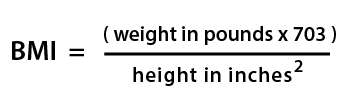
8. Special Considerations
Understand the special considerations in exercise for children, the elderly, and pregnant women. You should also know what positions pregnant women should never exercise in and why.
9. Planes of Motion
Understand the planes of motion that muscles move in and the types of joint movements.
10. Contraindications
Know the definitions of absolute and relative contraindication.
- Absolute contraindication: Should not perform until conditions are stabilized or adequately treated
- Relative contraindication: May be tested only after careful evaluation of risk-to-benefit ratio
11. Calories
Know how many calories are in macronutrients and how many calories are in a pound.
- Macronutrients: Carbohydrates, protein, fat
- 3,500 calories = 1 pound
12. Rotator Cuff Muscles
You can remember the rotator cuff muscles with ‘SITS’ muscles: Supraspinatus, Infrapspinatus, Teres Minor, Subscapularis
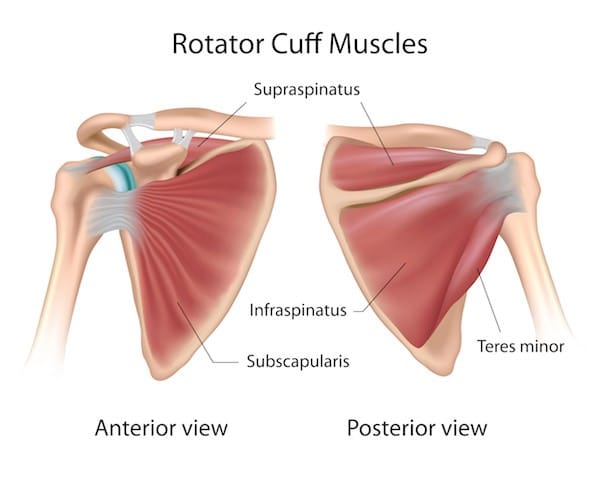
- Supraspinatus: Originates above the spine of the scapula and inserts on the greater tuberosity of the humerus. It abducts, or elevates, the shoulder joint.
- Infrapspinatus: Originates below the spine of the scapula, in the infraspinatus fossa, and inserts on the posterior aspect of the greater tuberosity of the humerus. It externally rotates the shoulder joint.
- Teres Minor: Originates on the lateral scapula border and inserts on the inferior aspect of the greater tuberosity of the humerus. It externally rotates the shoulder joint.
- Subscapularis: Originates on the anterior surface of the scapula, sitting directly over the ribs, and inserts on the lesser tuberosity of the humerus. It works to depress the head of the humerus, allowing it to move freely in the glenohumeral (shoulder) joint during elevation of the arm.
All four rotator cuff muscles work together to stabilize the head of the humerus in the glenohumeral (shoulder) joint.
13. Resistance Training
Understand the different types of resistance training. This includes supersets, splits, pyramids, etc.
14. General Exercise Prescription
Know the general exercise prescription for the healthy population.
15. Condition Recommendations
Know what recommendations are appropriate for hot and/or humid conditions.
What’s Next?
It’s a lot, but with careful prep and a good study strategy, you’ll be on your way to passing your ACSM CPT exam. If you’re looking for a little extra study help, Pocket Prep has you covered with study support through the convenience of a mobile app.
Pocket Prep offers exam prep for the ACSM-CPT, as well as many other exams, including NASM-CPT and NSCA CSCS.
